XAI Researcher · AI Systems Architect · h-index 2 · Puebla, MX

Research Depth.
Industry Impact.

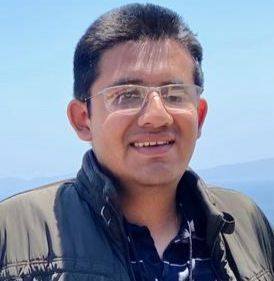
I'm Emilio Hernandez Arellano. I turn mathematical models into systems that ship — closing the gap between explainable AI research and production systems that reach 160+ people every week, run day-to-day by a team of three.

2Q1 Journals
h2Research Index
2+Years Industry
160+Active Consultants
Emilio Hernandez

Puebla, MX

Duality

One Engineer. Two Perspectives.

Academic Track

The Researcher

I focus on the "Why." I develop white-box analytical models for complex vision tasks, using evolutionary computation to recover hidden structural information from suboptimal environments — a transparent alternative to opaque deep learning.

Industry Track

The Builder

I focus on the "How." Same discipline as formulating the fitness function for a genetic algorithm: I don't write every line by hand, I define the problem — architecture, constraints, review criteria — precisely enough that directing AI agents to execute it produces the right system. The result: backend architecture, data pipelines, and transparent decision engines that handle real revenue and retain real people.

Languages

  • Python
  • C/C++
  • Bash
  • MATLAB

AI & Computer Vision

  • OpenCV
  • Scikit-Learn
  • NumPy
  • Pandas
  • Scikit-Image
  • TensorFlow
  • PyTorch

Advanced Methods

  • Explainable AI (XAI)
  • Evolutionary Computation
  • Generative AI
  • Heuristic Optimization

Backend & Data

  • FastAPI
  • Supabase
  • PostgreSQL
  • RLS / RBAC
  • JWT Auth

Infra & Deployment

  • Docker
  • Traefik (reverse proxy)
  • Cloudflare Tunnel
  • systemd / fail2ban

AI-Directed

  • Next.js
  • TypeScript
  • via agent orchestration

Design & Tools

  • Linux
  • Git
  • Fusion 360

Human Languages

  • 🇲🇽 Spanish · Native
  • 🇺🇸 English · B2

Industry

Applied Solutions

2025 — Present

AI Systems Architect & Automation Consultant

Swiss Just · Remote

  • Evolved a consultant management system through four architectural stages: local Excel/SQLite scripts → cloud ETL → REST API → full-stack web app, designing every architectural decision end-to-end.
  • Migrated SQLite to Supabase (PostgreSQL), designing RLS policies and concurrent Python ETL scripts for automated weekly ingestion of sales and hierarchy data.
  • Rebuilt the backend from Flask to FastAPI with async endpoints, JWT auth middleware, and clean service-layer architecture.
  • Designed and directed the AI-assisted implementation of a Next.js + TypeScript frontend with role-based access control, auto-logout, and a private CRM with smart omni-field search.
  • Designed a transparent churn-risk engine with human-readable rule logic and admin-configurable thresholds — applying XAI principles so team leaders can audit every algorithmic decision.
  • Designed a real-time personalized messaging engine for 160+ consultants — admin-editable master templates stored in Supabase with dynamic variable interpolation and per-consultant overrides, replacing static batch generation with on-demand session-aware content.
  • Developed a greedy optimization algorithm for minimum-cost product combinations ensuring consultants reach required sales targets.
  • Conducted authorization testing on the web application to verify privilege escalation prevention — validating that non-admin users cannot access admin routes or sensitive data under any session state.
  • Deployed and hardened the production VPS end-to-end: Docker Compose services behind a Traefik reverse proxy, exposed only through a Cloudflare Tunnel — zero public ports — with dedicated non-root service users and fail2ban on top.
  • Directed a multi-agent AI workflow — Claude (Anthropic) as senior, Gemini as junior — reviewing outputs, making architectural decisions, and coordinating via structured handoff documents.

2026

AI Trainer

Outlier · Remote

  • Evaluated multimodal content to determine whether images and audio were generated by AI systems.
  • Assessed artistic sketches to determine feasibility for realistic reconstruction using generative AI models.
  • Provided structured feedback contributing to improvements in frontier multimodal AI systems.

Research

Q1 Contributions

Q1 Journal · 2025

Analytical-heuristic modeling and optimization for low-light image enhancement

Applied Soft Computing (Elsevier)

Axel Martinez, Emilio Hernandez, Matthieu Olague, Gustavo Olague

  • Designed Dichotomy Tuna, a 7-parameter analytical algorithm extending the tone-dichotomy model for low-light image enhancement.
  • Integrated both the original mathematical model and the proposed algorithm into a Genetic Algorithm optimization framework.
ValidationSoftwareMethodologyInvestigationData Curation
Read Paper →
Q1 Journal · 2025

Modeling Image Tone Dichotomy with the Power Function

Applied Mathematical Modelling (Elsevier)

Axel Martinez, Gustavo Olague, Emilio Hernandez

  • Applied the tone-dichotomy mathematical model to recover hidden structural information from complex visual imagery.
  • Demonstrated applications including cultural heritage analysis and structural detail recovery.
VisualizationValidationSoftwareInvestigationData Curation
Read Paper →
Dataset · 2025

Adversarial attacks dataset for low light image enhancement

Data in Brief (Elsevier)

Axel Martinez, Matthieu Olague, Gustavo Olague, Emilio Hernandez, Julio Cesar Lopez-Arredondo

SoftwareMethodologyInvestigation
Dataset →
Service · 2024 — 2025

Peer Reviewer

Engineering Applications of AI · Elsevier

Ensuring methodological clarity and scientific rigor for manuscripts in the field of Artificial Intelligence.

ORCID Profile
Academia

Research Foundations

MSc · 2022 — 2024

Computer Science

CICESE · Baja California, México

Thesis: Use of Dichotomies for the Enhancement of Low-Light Colored Images

  • Developed an intrinsically explainable analytical model capable of recovering hidden information from low-light images.
  • Leveraged parameterized modeling and optimization techniques to maintain visual fidelity and interpretability.

Advised by Dr. Gustavo Olague — recognized among the World's Top 2% Scientists (Stanford · Elsevier, 2023).

BSc · 2017 — 2022

Biomedical Engineering

UDLAP · Puebla, México

Built foundations in signal processing, human physiology, and medical instrumentation — the bridge between biology and computation that shapes my research lens today.

Projects

Explorations